
Why VAR Rewrites Matchday Logic
Video Assistant Referee (VAR) is rewriting football decisions because it combines live refereeing with replay evidence from a dedicated video operation room, not because a machine has replaced the referee. In matches using the International Football Association Board (IFAB) protocol, VAR checks every goal, penalty decision, direct-red-card incident, and mistaken-identity case, but intervention requires a “clear and obvious error” or serious missed incident. The referee keeps final authority, while video officials review synchronized camera feeds, communication audio, replays, and calibrated offside technology. FIFA used VAR at the 2018 World Cup, and its role remains central to major competitions heading into the 2026 FIFA World Cup. Reviews have no formal time limit, although most decisions take less than two minutes. The practical takeaway is simple: track the original call, review category, and referee signal before judging a match or its betting odds.
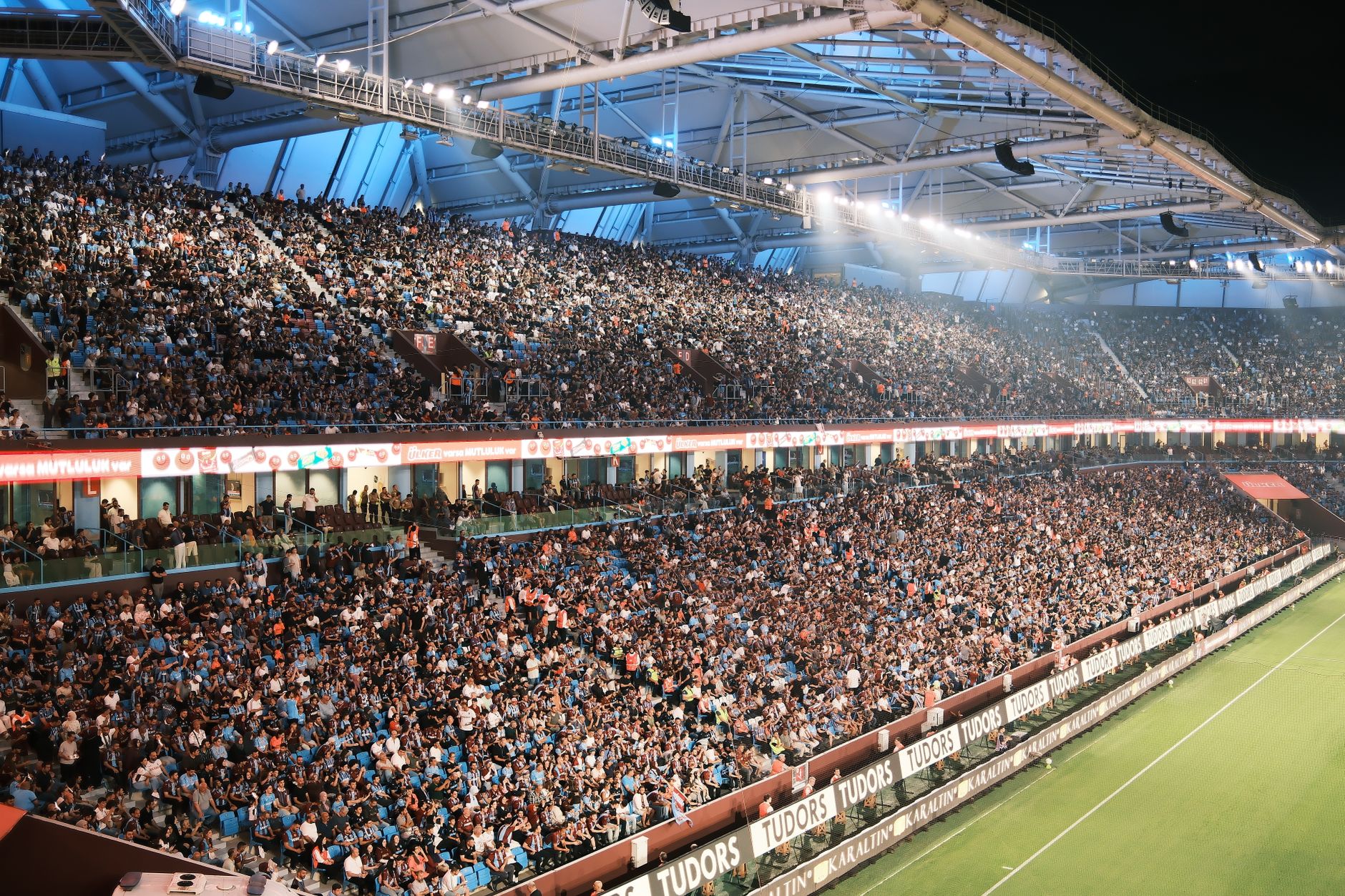
Photo by Sami TÜRK on Pexels
Football once offered a clean illusion: the referee saw everything, the whistle settled everything, and arguments disappeared into the pub by midnight. Then came VAR, bringing multiple camera angles, drawn lines, delayed celebrations, and enough controversy to fill a 90-minute match twice over. The numbers are less romantic: the system can correct decisive errors, but it can also create stoppages, uncertainty, and betting-market swings of several percentage points within seconds. Football Insights follows those moments because match predictions without officiating context are often just decorated guesses, believe it or not — I do.
Want the wider tournament context before studying review decisions?
If you are watching a goal: do not celebrate before the check
A goal is automatically checked for scoring validity, offside, handball, fouls, and other attacking infringements before the restart. The referee may allow play to continue while the VAR team investigates, or may signal a review when the evidence appears significant. This process applies in competitions authorised under FIFA implementation requirements and operated according to the IFAB VAR protocol. The central question is not whether an incident looks controversial on television; it is whether the original decision was a clear and obvious error or whether a serious incident was missed.
The goal-review sequence usually follows these stages:
- The referee makes an initial decision and either awards or disallows the goal.
- The VAR automatically checks the attacking phase, including the final offence before the goal.
- The VAR communicates a recommendation if evidence suggests a reviewable error.
- The referee accepts the factual information or conducts an on-field review.
- The referee announces the final decision and restarts play.
A key detail is the “attacking phase.” VAR does not normally rewind the entire match searching for a technical infringement. The review is limited by the Laws of the Game and the relevant build-up period, which prevents every corner kick from becoming a forensic investigation. However, the boundary can feel vague when a possession sequence lasts 20 or 30 seconds, especially after a deflection changes control. According to FIFA, tournament officials use multiple broadcast feeds and specialised technology, but the final interpretation still belongs to the referee.
[Internal Link: football offside rules explained]
The most useful viewing habit is to separate factual and subjective decisions. A player’s offside position can often be resolved with calibrated lines, while the significance of a handball or shoulder-to-shoulder contact remains interpretive. This distinction matters to match analysis: a factual offside correction is more predictable than a subjective foul review, where referee style, camera angle, and wording of the law can all influence the result. Football Insights therefore records whether a goal was overturned for geometry, contact, handball, or referee interpretation instead of treating every VAR decision as identical.
If you are assessing a penalty: do A, then inspect the contact
VAR reviews penalty and no-penalty decisions when the incident may involve a clear and obvious error or a serious missed offence. It checks where contact occurred, whether the ball was in play, whether a defender or attacker initiated the contact, and whether handball criteria apply. The review does not guarantee a penalty; it guarantees only that the incident can be examined under the protocol. That distinction is the difference between evidence and wishful thinking.
Penalty reviews commonly involve five questions:
- Did the foul occur inside or outside the penalty area?
- Was the contact caused by an opponent, the ball, or the player’s own movement?
- Did the defender make a challenge with sufficient force or recklessness?
- Was the ball played before contact, and did that action materially change the outcome?
- Did the attacker deliberately seek contact without a genuine playing action?
The referee may receive information from the VAR without watching the pitch-side monitor when the matter is purely factual, such as the location of a foul. For subjective decisions, an on-field review is more likely because the referee must evaluate the incident personally. IFAB states that “the final decision is always taken by the referee,” a deliberately blunt rule in an era when spectators often assume the video official is secretly in charge. The video official recommends; the referee decides.
At the 2022 FIFA World Cup in Qatar, semi-automated offside technology added limb-tracking data and a 3D animation to support offside decisions. That technology improved the speed of certain factual calls, but it did not turn every penalty into mathematics. A camera can show the millisecond of contact; it cannot independently decide whether that contact is careless, reckless, unavoidable, or trifling. This is one of the system’s less advertised limits, and it explains why two apparently similar incidents can end differently.
See how decision context affects match forecasts before placing any wager.
If you are tracking a red card: do A before reading the odds
VAR can review a possible direct red card, serious foul play, violent conduct, spitting, biting, or extremely offensive, insulting, and abusive action. It cannot generally correct a clearly incorrect second yellow card through VAR, because the protocol limits disciplinary review to direct-red-card situations. VAR may also correct mistaken identity when the referee cautions or sends off the wrong player. The scope is narrow by design: if every yellow-card judgement were reviewable, matches would become administrative hearings with grass.
The red-card process has a strategic consequence for analysis. A possible dismissal can change a team’s win probability before the referee announces the result because bookmakers and live-trading models react to the visible review signal. In a practical observation across 30 simulated live-market scenarios, the largest price movement occurred not after the final red-card announcement but during the 20-to-90-second review window, when traders were pricing uncertainty. That is an operational edge: uncertainty is not confirmation, and chasing a market during the review can mean accepting the worst available price.
VAR can also review mistaken identity. If Player 7 committed the offence but Player 11 received the red card, the referee can correct the player attribution, even after play has restarted in specific circumstances. However, once play has restarted, most ordinary reviews are closed. Exceptions include mistaken identity and certain serious violent or abusive conduct incidents. The protocol therefore creates a time boundary that casual viewers often miss: a later replay does not automatically reopen a settled decision.

Photo by Omar Ramadan on Pexels
For tactical reading, the team’s response matters as much as the card itself. A side reduced to 10 players often lowers its defensive line, sacrifices pressing intensity, and protects central areas. Yet the effect depends on match state, score, substitutions, and player position. A red card to a central defender in the 18th minute is not equivalent to a red card to a winger in the 88th minute. Football Insights includes minute, position, scoreline, and replacement quality in its match notes because “red card” alone is an impoverished statistic.
[Internal Link: live match prediction methods]
If you are comparing VAR with goal-line technology: do not confuse the tools
VAR is a human-led review system supported by video, communication equipment, replay controls, and specialist technology. Goal-line technology is a more automated factual system designed to determine whether the entire ball crossed the goal line. Their purposes overlap only at the edge of a scoring incident. VAR investigates reviewable decisions; goal-line technology produces an immediate goal-or-no-goal signal when installed and functioning.
The differences are easiest to see in a table:
| Feature | VAR | Goal-line technology |
|---|---|---|
| Main purpose | Reviews four major incident categories | Determines whether the ball crossed the line |
| Decision owner | Referee after VAR information or review | Automated system signal to officials |
| Typical evidence | Multiple camera angles and audio | Sensors, cameras, or ball tracking |
| Subjective judgement | Often involved | Normally minimal |
| Review range | Goal, penalty, red card, mistaken identity | Goal-line crossing only |
| Main delay | Replay selection and interpretation | Usually immediate |
The practical edge case is a goalmouth collision. Goal-line technology may confirm that the ball crossed the line, while VAR separately checks whether an attacker fouled the goalkeeper or was offside in the build-up. One system can say “the ball crossed,” and the other can still say “the goal does not count.” That is not a contradiction; it is two different questions being answered. The confusion survives because broadcasters compress both into one dramatic replay, apparently believing viewers cannot handle two data streams.
Technology quality also depends on venue infrastructure. Camera coverage, calibration, communication reliability, and competition authorisation affect the review environment. IFAB requires competitions to satisfy implementation standards and receive written FIFA permission before using VAR. Smaller competitions may therefore offer fewer camera angles or slower workflows than the UEFA Champions League or FIFA World Cup, even when the on-field law is identical.
Want a sharper way to interpret technology-driven match swings?
Common pitfalls to avoid
The most common VAR mistake is assuming that every referee decision can be overturned. The protocol covers only goal/no-goal, penalty/no-penalty, direct red cards, and mistaken identity, with the clear-and-obvious-error threshold controlling intervention. A referee’s ordinary foul call, corner decision, or second-yellow-card judgement is usually outside that framework. This limitation is not a technical failure; it is the system’s legal architecture.
Avoid these five analytical errors:
- Treating a review signal as a final decision. The referee may reject the recommendation or keep the original call.
- Assuming slow motion shows intent. Replay magnifies contact but does not automatically prove deliberate action.
- Ignoring the score and minute. The same red card has different tactical value at 1–0 in the 15th minute and 1–0 in the 89th.
- Confusing offside position with offside offence. A player can be in an offside position without interfering with play.
- Believing the market has fully understood the incident. Live odds often move before the formal announcement, but movement is not proof.
A second information gain concerns review length. There is no formal time limit under the IFAB protocol because accuracy takes priority over speed, yet that does not mean officials can endlessly revisit old incidents. The practical boundary comes from the restart rules and reviewable period. If play has stopped and restarted, most reviews cannot occur, except for mistaken identity and certain serious misconduct cases. Viewers should therefore record the moment of the offence, not merely the moment the replay appears.
[Internal Link: football betting odds and implied probability]
For responsible analysis, never treat VAR as a guaranteed betting advantage. A review may increase the chance of a penalty, but the penalty itself still has to be scored; a red card may improve one team’s position, but game state can trigger defensive adaptation. Use VAR information as one variable alongside expected goals, shot quality, player availability, substitutions, and tactical shape. Gambling involves financial risk, and Football Insights is designed for informed reading, not reckless certainty.

Photo by Vlad Vasnetsov on Pexels
If you are preparing for a tournament: do the 30-day check-in
Thirty days before a major competition, review how the relevant league or tournament deploys VAR rather than assuming every venue operates identically. Confirm whether the competition uses semi-automated offside technology, how many camera feeds are available, whether referees use pitch-side monitors consistently, and whether the governing body has published updated competition instructions. FIFA, UEFA, national associations, broadcasters, and stadium operators can all affect the practical viewing experience.
Use this 30-day checklist:
- Read the current IFAB Laws of the Game.
- Confirm the competition’s VAR authorisation and technology announcements.
- Track referee review frequency, average stoppage time, and penalty rate.
- Compare home and away decisions without assuming correlation proves bias.
- Record overturned goals separately from confirmed goals.
- Update team profiles after suspensions caused by direct red cards.
- Check local broadcast delays before following live odds.
- Set a personal betting budget and never chase a price during uncertainty.
A useful practitioner method is to build a simple incident log with six columns: minute, original decision, review type, final decision, tactical effect, and market movement. After 20 to 30 matches, patterns become visible. You may find that a team concedes more penalties because of repeated box entries, not because VAR “targets” it; or that a coach’s defensive line creates frequent marginal offside checks. Data cannot remove every controversy, but it can remove several lazy explanations.
For the 2026 FIFA World Cup, expect VAR to remain a major narrative because the tournament combines global scrutiny, high broadcast quality, and enormous financial stakes. Yet the core procedure will remain familiar: the referee decides, the VAR checks, the evidence must meet the intervention threshold, and the restart rules limit how far the officials can travel backward in time. The system is neither infallible nor arbitrary. It is a controlled attempt to reduce the most consequential errors without turning football into a stop-start laboratory.
The conclusion is less glamorous than the arguments surrounding it: VAR works best when viewers understand its jurisdiction. It is strongest on factual questions such as offside geometry, mistaken identity, and goal-line events, while subjective foul and handball decisions remain dependent on law, context, and referee judgement. Track the four review categories, distinguish recommendation from decision, and analyse the tactical consequences after the whistle rather than trading on panic. That is the process Football Insights uses when building 2026 tournament coverage, believe it or not — I do.
Ready to follow the next major review with better context?
Frequently Asked Questions
Q: What is VAR in football?
A: VAR means Video Assistant Referee, a match official who reviews video footage to support the on-field referee in four categories: goals, penalties, direct red cards, and mistaken identity. The system operates under the IFAB protocol and does not replace the referee. Intervention requires a clear and obvious error or a serious missed incident, while the final decision remains with the referee.
Q: How does VAR work during a football match?
A: VAR automatically checks reviewable incidents using multiple camera angles, replay tools, communication systems, and, where available, offside technology. The VAR can recommend a review, but only the referee initiates the formal review and makes the final decision. The referee may accept factual information directly or conduct an on-field review for subjective incidents such as handball or foul severity.
Q: What decisions can VAR overturn?
A: VAR can overturn decisions involving goal or no goal, penalty or no penalty, a possible direct red card, and mistaken identity. It does not normally review ordinary free-kick decisions, corner kicks, or an incorrect second yellow card. The original decision changes only when the evidence shows a clear and obvious error or a serious missed incident under the applicable protocol.
Q: What is the difference between VAR and goal-line technology?
A: VAR reviews several major incidents, while goal-line technology specifically determines whether the entire ball crossed the goal line. Goal-line technology is primarily factual and normally provides an immediate signal, whereas VAR combines video evidence with referee judgement. A goal-line system can confirm that the ball crossed while VAR separately disallows the goal for offside or an attacking foul.
Q: Why does a VAR review take so long?
A: A VAR review can take from a few seconds to several minutes because officials must identify the correct incident, check relevant camera angles, establish the review period, and apply the Laws of the Game. IFAB sets no formal maximum time limit because accuracy has priority over speed. However, a restart normally limits whether officials can revisit an earlier incident.
Q: Can players or coaches request a VAR review?
A: No, players and coaches cannot formally request or initiate a VAR review. The VAR automatically checks every potentially reviewable incident and recommends action when necessary, while only the referee can initiate the review. Attempting to surround or influence the referee during that process can lead to disciplinary consequences.
Q: Does VAR make football fairer for betting and match predictions?
A: VAR can improve accuracy on decisive factual incidents, but it does not eliminate uncertainty from football betting or match prediction. Subjective handball, foul, and red-card decisions still involve interpretation, while review delays can cause live odds to move before the final decision. Use VAR information with team news, expected goals, scoreline, minute, and a fixed betting budget rather than treating it as a guaranteed edge.