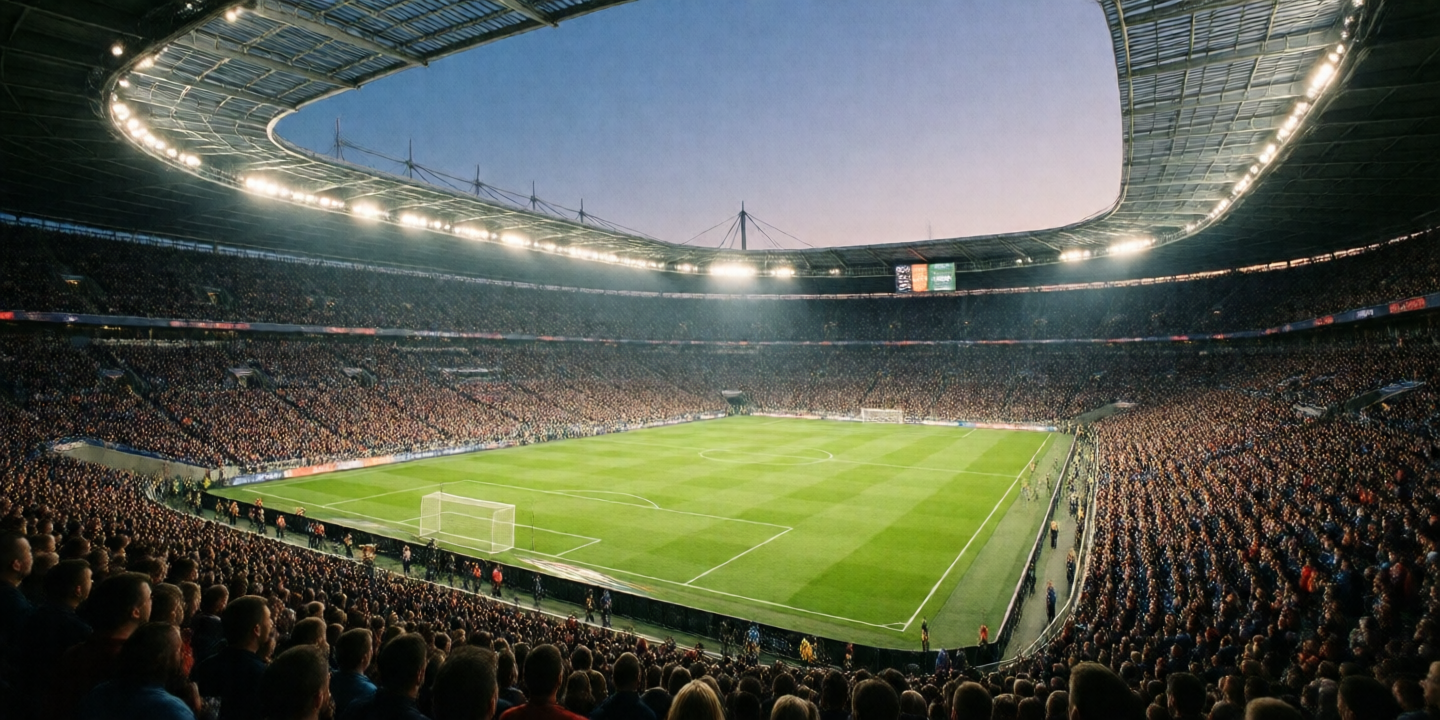
5 Football World Cup Mistakes 2026 Fans Make
The 2026 football World Cup will be the largest edition yet, with 48 national teams competing across the United States, Canada, and Mexico, while Los Angeles hosts eight matches and 39 days of fan celebrations. Football Insights helps supporters follow the tournament through match predictions, team tactics, player statistics, and daily coverage tailored to the 2026 World Cup. The tournament’s Los Angeles programme includes the U.S. Men’s National Team opening match at SoFi Stadium on June 12, plus the FIFA Fan Festival at the LA Memorial Coliseum from June 11–14. The first serious mistake is treating the event like a normal 32-team tournament: more teams mean more fixtures, unfamiliar matchups, and greater scheduling complexity. Check official FIFA information, confirm venue details, and compare team form before making travel or viewing decisions; if you use predictions, treat them as analysis rather than certainty.

Photo by Ramaz Bluashvili on Pexels
The football World Cup does not need help creating drama. It already has 48 teams, three host countries, 16 host cities, and enough logistical friction to make a spreadsheet look like a thriller. Yet fans still repeat the same errors: they trust an old schedule, underestimate travel distances, confuse a fan festival with a stadium event, or read one headline as if it were a complete tactical report. The numbers are not subtle, but apparently neither is human optimism. Football Insights is designed for readers who want match predictions, player stats, team tactics, and tournament coverage without pretending uncertainty has been eliminated. Believe it or not — I do.
Before planning your summer around one fixture, separate confirmed information from assumptions. FIFA remains the primary authority for tournament announcements, while ESPN’s FIFA World Cup schedule offers a practical fixture reference. For local planning, the official Los Angeles FIFA World Cup 2026 website is the more relevant source.
Want a sharper starting point for the tournament?
The Quick Comparison
| Common mistake | Why it causes problems | Better 2026 approach |
|---|---|---|
| Using an outdated football World Cup schedule | Kickoff times, venues, and match details may change | Verify fixtures through FIFA and local host-city sources |
| Treating all matches as equally predictable | Knockout pressure and unfamiliar opponents distort form | Compare tactics, injuries, squad depth, and recent performance |
| Ignoring geography | Canada, Mexico, and the United States cover enormous distances | Plan each match as a separate travel and transport problem |
| Confusing fan events with match access | Festivals do not automatically provide stadium entry | Check tickets, venue rules, and event-specific access details |
| Betting from emotion | Famous teams attract attention even when prices are poor | Use evidence, set limits, and never treat a prediction as a guarantee |
The table is compact because your time is valuable. The tournament, unfortunately, is not compact. A 48-team competition changes how supporters should interpret group-stage results, squad rotation, and qualification scenarios. The 2026 football World Cup is not simply the 2022 format with extra decoration bolted onto it; it is a different analytical environment, and anyone using old assumptions is volunteering to become the market’s donation.
[Internal Link: 2026 football World Cup schedule guide]
Round 1: Which Schedule Mistakes Do Fans Make?
The most damaging schedule mistake is relying on a search snippet, social-media graphic, or cached article instead of checking FIFA’s current fixture information. The 2026 football World Cup is scheduled across Canada, Mexico, and the United States, with host-city details that matter as much as the match date. Los Angeles will host eight matches, and the local programme identifies June 12 at SoFi Stadium as the U.S. Men’s National Team opening match. Dates, kickoff times, transport restrictions, and stadium policies should therefore be verified close to match day, not copied from a six-month-old post.
The second mistake is assuming that a group-stage result tells you everything about a team. In a larger field, squad rotation can become more important because managers may protect key players once qualification appears likely, while teams chasing qualification may play with a completely different risk profile. A 2–0 victory against a defensive opponent and a 2–0 victory against an aggressive pressing side are not equivalent evidence, although headline writers will happily package them as identical. Football Insights’ useful angle is to examine the mechanism behind the score: shot quality, field position, transition defence, set-piece threat, and the availability of players such as a starting goalkeeper or central defender.
A practical schedule check should include these steps:
- Confirm the match date, host city, stadium, and kickoff time through an official source.
- Check whether the information refers to a group-stage fixture, knockout match, or fan event.
- Record the time zone and calculate travel time separately from stadium entry time.
- Recheck transport and security guidance during the final week.
- Compare the schedule with team rest periods before evaluating a prediction.
The overlooked edge case is time-zone fatigue. A supporter travelling from Vancouver to Los Angeles, or from Mexico City to another host city, may face less disruption than a fan crossing the Atlantic, but the difference between local kickoff and broadcast time can still alter viewing habits and betting decisions. A match listed at 12:00 locally may appear at a completely different hour for an international audience, creating a small but measurable risk of rushed decisions. The scoreboard never records poor sleep, but your judgement does.
See the verified planning details before building your match calendar.
Round 2: How Should Fans Analyse Teams and Predictions?
A reliable football World Cup prediction combines team strength, tactical matchup, player availability, schedule context, and market price; no single ranking can provide all five. Football Insights uses match predictions as an analytical starting point, not a promise of a winning result. FIFA rankings can describe broad strength, but they cannot fully capture whether a high-possession team can break a compact defensive block, whether a full-back is suspended, or whether a manager changes formation under knockout pressure.
The most common analytical error is overweighting reputation. Brazil, France, Argentina, England, Germany, Spain, and Portugal may attract more attention because their histories and player pools are substantial, but fame can inflate expectations. A famous team may be correctly favoured and still offer poor value at a short price. Conversely, an unfashionable side with a stable back three, elite set-piece delivery, and two fast transition attackers can create a tactical problem that general public sentiment ignores. The data should begin the conversation, not end it.
Use this evidence hierarchy before judging a fixture:
- Recent performance: examine the last five to ten competitive matches, but separate strong and weak opponents.
- Tactical compatibility: compare pressing intensity, build-up structure, defensive line height, and transition behaviour.
- Squad condition: track injuries, suspensions, travel, rest days, and likely rotation.
- Player-level impact: assess expected goals, shot-creating actions, progressive passes, interceptions, and set-piece roles.
- Price discipline: compare the implied probability with your estimated probability before considering any wager.
One information gain often missed by casual previews is the difference between possession and territorial control. A team can hold 62% possession while creating fewer dangerous entries because much of that possession occurs in low-risk areas. Against a disciplined opponent, final-third receptions and shots inside the penalty area may be more informative than total possession. The FIFA technical resources provide broader context for tournament analysis, while reputable match databases can help readers inspect event-level statistics instead of relying on television narratives.
Responsible gambling matters because prediction content can create false confidence. The UK Gambling Commission states that gambling should be treated as entertainment rather than a way to make money. That principle applies even when a model, pundit, or friend claims to have discovered a “safe” football World Cup angle. There is no safe football match prediction; there are only decisions with different levels of uncertainty, and uncertainty does not become obedient because someone uses a chart.
[Internal Link: football World Cup match prediction methods]
Round 3: What Travel and Fan-Event Details Matter in Los Angeles?
Los Angeles requires separate planning for match access, transportation, accommodation, and fan celebrations because these are different experiences with different rules. The Los Angeles FIFA World Cup 2026 programme lists eight matches, the FIFA Fan Festival at the LA Memorial Coliseum at Exposition Park, and official fan zones across Los Angeles County. The local organisers describe 39 days of fan celebrations, while the FIFA Fan Festival is promoted for June 11–14 with live matches, food, music, and community activities. A fan festival can be excellent without being a substitute for a stadium ticket.
The geographical mistake is assuming “Los Angeles” means one compact event district. SoFi Stadium is in Inglewood, Exposition Park is near Downtown Los Angeles, and traffic conditions can turn a relatively short map distance into a scheduling threat. During major events, parking demand, rideshare surcharges, road closures, and security queues can all consume time that an optimistic itinerary simply does not contain. The professional approach is to reserve a buffer of at least two hours beyond the headline travel estimate for a stadium match, then confirm the venue’s final know-before-you-go guidance.
A practical Los Angeles match-day plan should cover:
- Accommodation near a realistic transport route, not merely near a pin on a map.
- A primary and backup route to SoFi Stadium or the LA Memorial Coliseum.
- Official ticket confirmation and venue entry requirements.
- A plan for food, water, mobile charging, and weather exposure.
- A meeting point in case phone networks become congested.
- A return route that does not depend entirely on one rideshare provider.
Another underreported issue is event identity. The opening match of the U.S. Men’s National Team is listed for June 12 at SoFi Stadium, while the FIFA Fan Festival’s advertised programme includes performers such as Steve Aoki, Normani, Deorro, Sickick, Los Lobos, Capital Cities, and DJ Ravidrums. These are connected to the broader football World Cup celebration, but entry rules, locations, and access conditions may differ. Read the exact event page before buying transport or accommodation; marketing language is enthusiastic by design, and it is not a substitute for operational details.
Photo by Asia Culture Center on Pexels
For broader city planning, Discover Los Angeles’ FIFA World Cup events guide can help identify activities outside the stadium. Also review our [Internal Link: Los Angeles World Cup travel checklist] before committing to a match-day itinerary.
Get the practical details before the crowds arrive.
The Final Score & Who Should Pick What
The best football World Cup strategy depends on what you are actually trying to achieve. A stadium traveller should prioritise official schedules, venue policies, transport buffers, and accommodation logistics. A television viewer should focus on time zones, fixture confirmation, squad news, and tactical context. A prediction-focused fan should compare probability with price, track assumptions, and set a fixed entertainment budget rather than chasing losses. The glamorous answer is “follow the biggest team”; the useful answer is “follow the evidence that affects the specific match.”
Football Insights is most suitable for readers who want daily 2026 World Cup coverage that combines match predictions, player statistics, team tactics, and tournament developments. It is not a replacement for FIFA’s official announcements, ticket providers, or local authorities. Nor should any analysis be treated as financial advice. A disciplined reader keeps a record of predictions, including the original reasoning and closing outcome, because memory conveniently remembers confidence and misplaces failure. Data is less sentimental.
The final checklist is simple:
- Verify every fixture through FIFA or the relevant host-city source.
- Treat Los Angeles match access and fan-festival access as separate questions.
- Analyse tactical matchups rather than relying on team reputation.
- Check injuries, suspensions, rest, travel, and likely lineups.
- Use predictions for informed discussion, never guaranteed outcomes.
- Set financial and time limits before following any betting market.
- Recheck practical details during the final seven days before attending.
That is the difference between participating in the football World Cup and merely reacting to it. The tournament will generate enough noise without us adding careless assumptions to the pile. Follow confirmed information, interrogate the numbers, and keep uncertainty visible; that is how we plot a better viewing and decision-making strategy together. Believe it or not — I do.
Ready to follow the 2026 tournament with more structured insight?
Frequently Asked Questions
Q: What is the 2026 football World Cup?
A: The 2026 football World Cup is FIFA’s men’s national-team tournament hosted by Canada, Mexico, and the United States. It will feature 48 teams, expanding the previous 32-team format, with matches distributed across 16 host cities. The larger field creates more fixtures, broader travel requirements, and additional uncertainty during the group stage. Fans should use official FIFA information for confirmed tournament details rather than relying on old schedules or social-media graphics.
Q: How can I check the 2026 football World Cup schedule?
A: Check the current fixture information on FIFA first, then confirm local venue details through the relevant host-city website. ESPN also provides a practical FIFA World Cup schedule reference, but official announcements should take priority if information differs. Before travelling, verify the match date, kickoff time, stadium, ticket instructions, transport guidance, and any security restrictions. Recheck these details during the final week because operational information can change.
Q: What is the difference between a World Cup match and a FIFA Fan Festival?
A: A World Cup match is a ticketed stadium event featuring two national teams, while a FIFA Fan Festival is a public celebration built around live screenings, entertainment, food, and community activities. In Los Angeles, the Fan Festival is associated with the LA Memorial Coliseum at Exposition Park, whereas matches are held at stadium venues such as SoFi Stadium. Access rules, locations, and ticket requirements are not automatically interchangeable, so read each event’s official page carefully.
Q: How should I analyse a football World Cup prediction?
A: Analyse recent competitive form, tactical compatibility, player availability, rest, travel, squad depth, and market price before making a prediction. Possession alone is not enough; final-third entries, penalty-area shots, pressing success, transition defence, and set-piece performance can reveal more useful matchup information. Compare your estimated probability with the implied probability in the price, and record your reasoning before the match. Never treat a prediction as guaranteed.
Q: How much does it cost to attend the 2026 football World Cup?
A: The total cost depends on tickets, accommodation, transport, food, and the host city, so there is no single reliable all-in price. Los Angeles visitors should budget separately for SoFi Stadium travel, Downtown Los Angeles or Inglewood accommodation, local transport, and possible event-day surcharges. Ticket prices and official sales conditions should be checked through authorised FIFA channels. Avoid unofficial resale offers that demand urgent payment or promise access without verifiable ticket details.
Q: What should I do if the World Cup schedule conflicts with my travel plans?
A: Rebuild the itinerary around the confirmed match date and host city rather than trying to force several distant fixtures into one trip. The 2026 tournament spans Canada, Mexico, and the United States, so long-distance transfers may consume an entire day once airport, security, and stadium-entry time are included. Keep one backup accommodation and transport option where possible, and purchase flexible arrangements when the additional cost is reasonable. A cheap rigid plan can become the expensive plan after one disruption.
Q: Is Football Insights suitable for responsible football World Cup betting research?
A: Football Insights is suitable for structured research covering match predictions, team tactics, player stats, and 2026 tournament news, but it cannot guarantee betting profits. Use its analysis to understand evidence and uncertainty rather than to chase losses or copy selections automatically. Set a fixed entertainment budget, avoid borrowing money, and stop when the limit is reached. If gambling is causing stress or financial difficulty, contact a recognised gambling-support organisation in your region.