
5 Football 2026 World Cup Mistakes Fans Make
Football 2026 World Cup planning begins with one hard fact: FIFA will stage its first 48-team tournament across Canada, Mexico, and the United States from 11 June to 19 July 2026. The competition will feature 104 matches, with Atlanta hosting eight games, Los Angeles hosting eight, and the final scheduled for New York New Jersey Stadium. Football Insights tracks fixtures, team tactics, player statistics, match predictions, and tournament developments for supporters and legally eligible bettors across North America and international markets. The biggest errors are not usually tactical; they are logistical and analytical. Fans underestimate distances, trust unverified ticket claims, compare odds without checking markets, and mistake tournament excitement for reliable evidence. FIFA’s expanded format creates more group-stage variables, while travel across three countries adds cost and fatigue. Start by verifying the official match calendar, your local betting rules, and every ticket or travel provider before spending money.

Photo by El gringo photo on Pexels
The 2026 World Cup will look glamorous on television: stadium lights, flags, choreographed ceremonies, and broadcasters confidently declaring that destiny has arrived. Behind the screen sits a less romantic spreadsheet involving 16 host cities, border crossings, hotel pricing, kickoff times, squad rotation, and probability models. The tournament’s scale is the opportunity, but also the trap. A supporter following one team may need to cross thousands of kilometres between matches, while a bettor may be tempted by a headline narrative before examining injuries or schedule congestion. Football Insights treats the event as both a sporting festival and a data problem. That means separating confirmed information from promotional language, and separating a strong team from a strong price. Believe it or not — I do.
Want a clearer way to follow the tournament?
Step 1: Confirm the 2026 World Cup structure
The first step is confirming the tournament’s format, host cities, and match information through official sources rather than social-media summaries. FIFA World Cup 2026 will contain 48 teams divided into 12 groups of four, with 32 teams advancing to the knockout phase. The event will run across Canada, Mexico, and the United States, creating a schedule that demands more than casual calendar checking. Verify each fixture, venue, kickoff time, and qualification status through FIFA’s official World Cup 2026 website.
A common mistake is assuming that the 2026 competition follows the old 32-team rhythm. It does not. The 104-match schedule creates additional opportunities for teams to rotate players, protect injured starters, or approach the final group match according to qualification mathematics rather than spectacle. FIFA’s own tournament announcement described the expanded event as “the biggest and most inclusive FIFA World Cup ever,” which is marketing language, certainly, but the number of teams and matches confirms the scale.
A second mistake is treating all host cities as interchangeable. Atlanta’s Mercedes-Benz Stadium, Los Angeles’ SoFi Stadium, Mexico City’s Estadio Azteca, Toronto’s BMO Field, and Miami’s Hard Rock Stadium differ in climate, altitude, transport, and local time. Mexico City’s altitude is roughly 2,240 metres above sea level, while Miami brings heat and humidity; those conditions can influence recovery and pressing intensity. Use our 2026 World Cup host cities guide when building a match itinerary, and keep confirmed information separate from rumours.
What does the 48-team format change for football fans?
The 48-team format increases the World Cup from 32 to 48 nations and produces 104 matches instead of the previous 64. Twelve groups of four will send the group winners, runners-up, and eight best third-placed teams into a 32-team knockout bracket. Fans should therefore assess qualification scenarios and squad rotation instead of assuming every group match has identical stakes.
The third-placed qualification system is particularly important. In a traditional four-team group, a team may believe that six points guarantees progress, but the required threshold can shift according to goal difference and results elsewhere. A late match between already-qualified opponents may also produce a different tactical contest from a decisive elimination game. The data point most casual previews ignore is match-state dependency: possession, pressing, and shot volume often change after the opening goal, so historical averages alone can mislead. Football Insights will track live context, but supporters should first understand what each result means in the table.
Step 2: Build a travel plan around geography
The second step is planning travel by regional clusters rather than chasing every attractive fixture. Canada, Mexico, and the United States create a continental tournament, not a compact European road trip. Los Angeles to New York is more than 3,900 kilometres by air, while Atlanta to Seattle is also a major cross-country journey. Add airport transfers, security queues, hotel changes, and possible border requirements, and a two-match itinerary can quietly become a fatigue test with a football theme.
The sensible approach is to select a base city and then add one nearby match before considering a long transfer. Atlanta offers strong domestic air connections and eight matches, while Los Angeles combines eight matches with a 39-day fan celebration programme and a FIFA Fan Festival at the LA Memorial Coliseum at Exposition Park. Those details matter because fan activity can fill non-match days, reducing the pressure to travel constantly. A supporter with a seven-day stay should budget for transportation, meals, accommodation, local taxes, and emergency changes rather than calculating only the ticket price.
- Group matches by region: West Coast, Central, East Coast, Canada, or Mexico.
- Leave at least one recovery day after an international or cross-country transfer.
- Compare total journey time, not simply the flight duration.
- Check passport, visa, entry, and stadium security requirements.
- Keep digital and printed copies of reservations and identification.
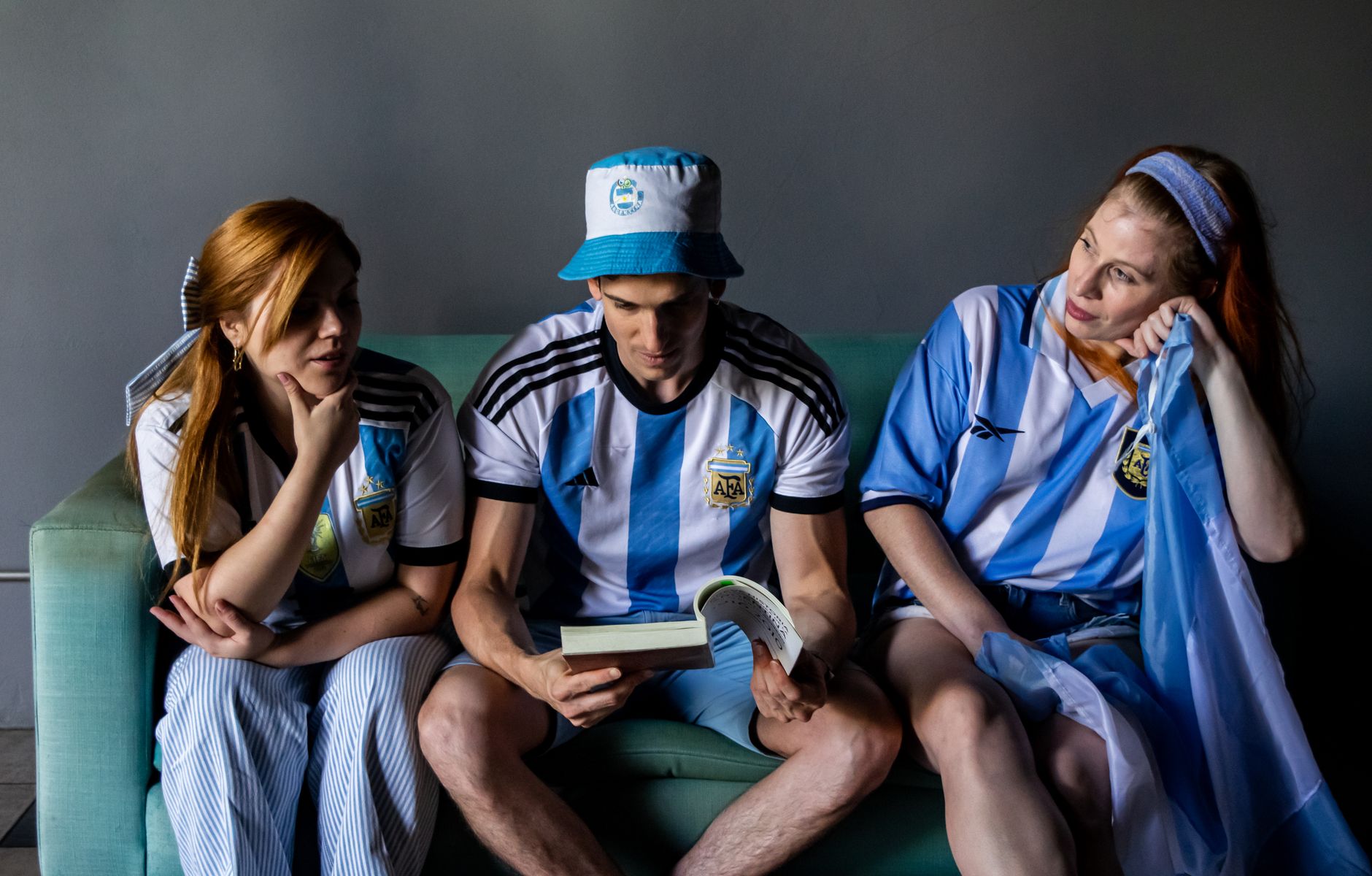
Photo by Kari Alfonso on Pexels
The hidden cost is schedule fragility. A delayed flight from Dallas to Atlanta may affect a same-day match, but a delayed international connection can create immigration and baggage complications that no optimistic itinerary survives. Weather also deserves attention: June and July can bring heat, thunderstorms, wildfire smoke, or transportation disruption in different regions. The U.S. Department of State travel information, Government of Canada travel advice, and official Mexican travel guidance should be checked before departure, not after a boarding gate closes. This is not glamorous advice. It is the difference between watching a quarter-final and viewing a hotel television replay.
See the practical planning details before booking anything.
Step 3: Read teams through tactics, not reputation
The third step is replacing reputation with current evidence. France, Brazil, Argentina, England, Spain, Germany, and Portugal may attract attention because of squad depth and historical performance, but a famous crest does not automatically justify a short betting price. The relevant variables include expected goals, shot quality, defensive transition numbers, set-piece efficiency, goalkeeper performance, injuries, travel load, and opponent style. A team that dominates weak opposition may look statistically superior until its possession is tested by an aggressive mid-block.
Football Insights evaluates match predictions through several layers rather than one ranking. First, examine recent performance over a meaningful sample, ideally separating competitive matches from friendlies. Second, identify whether the team’s tactical identity is stable: a high press with declining recovery numbers may become vulnerable in humid conditions, while a low block can remain effective but produce fewer scoring opportunities. Third, check squad availability and expected line-ups close to kickoff. “Momentum” is often just a story built after the result, and stories are remarkably poor substitutes for probability.
Why is tactical context important in World Cup predictions?
Tactical context matters because World Cup matches are shaped by opponent style, match state, venue conditions, and squad availability, not rankings alone. A team’s average possession or goals per game can conceal weaknesses against pressing, set pieces, counterattacks, altitude, or defensive blocks. Compare at least three indicators before forming a prediction: chance quality, transition control, and confirmed personnel.
A practical scouting sheet should include:
- Chance creation: expected goals, shots inside the penalty area, and big chances.
- Defensive control: opponent shot quality, final-third entries, and set-piece concessions.
- Transition profile: ball losses, counterattacking shots, and recovery speed.
- Availability: injuries, suspensions, rotation risk, and goalkeeper status.
- Context: venue, climate, rest days, travel distance, and qualification pressure.
The contrarian insight is that tournament forecasting should sometimes downgrade an elite team after a comfortable win. If a favourite leads 2–0 early and spends 60 minutes protecting energy, its final statistics may look less dominant than the performance actually was. Conversely, a team that piles up late shots while trailing can inflate volume without demonstrating control. Use World Cup team tactics and player statistics to separate scoreline noise from repeatable performance patterns. The numbers are not perfect; they are simply less theatrical than punditry.
Step 4: Treat odds and predictions as probability tools
The fourth step is understanding what betting odds actually communicate. Decimal odds of 2.00 imply a raw probability of 50% before considering the bookmaker’s margin; odds of 1.50 imply approximately 66.7%. Those figures are not promises, and they are not forecasts handed down from a mountain. They are prices shaped by probability estimates, market competition, customer behaviour, and margin. A bettor must compare the estimated probability with the implied probability and decide whether any edge survives the bookmaker’s overround.
For example, a three-way market priced at 2.10, 3.40, and 3.60 has implied probabilities of approximately 47.6%, 29.4%, and 27.8%, totalling 104.8%. The extra 4.8% represents an approximate margin before other market conditions. A bettor who selects the most likely team without checking that margin may still be paying too much. The sharper question is not “Who will win?” but “Is the offered price greater than the probability-adjusted risk?” That distinction is less exciting, which is precisely why it is useful.
Responsible betting also requires legal and financial boundaries. Check the rules of your jurisdiction, use licensed operators where betting is permitted, set deposit and loss limits, and never treat Football Insights analysis as a guarantee. The National Council on Problem Gambling provides responsible gambling resources in the United States, while local regulators govern eligibility and operator licensing elsewhere. Betting below a predetermined entertainment budget is not a weakness; it is basic risk control. Chasing a losing accumulator because “the next match must land” is not strategy. It is arithmetic wearing a costume.
Want to compare match analysis with disciplined probability thinking?

Photo by Déji Fadahunsi on Pexels
A useful operational rule is to record the reason for every prediction before kickoff. Write down the price, estimated probability, expected line-up, key tactical matchup, and maximum acceptable stake. After the match, review whether the reasoning was sound, not merely whether the result was correct. A 30% probability event can happen; one successful outcome does not validate a poor method. Over a larger sample, disciplined record-keeping exposes whether your edge is real or whether selective memory has been quietly editing the evidence. Believe it or not — I do.
Step 5: Verify tickets, schedules, and information sources
Verification is where many World Cup plans collapse. Official FIFA ticket channels, host-city authorities, stadium policies, airline providers, hotels, and licensed betting operators should be checked independently. A screenshot with a tournament logo proves almost nothing; logos are among the cheapest forms of counterfeit confidence. Confirm the seller’s domain, payment protections, refund terms, delivery timeline, seat details, and identity requirements before sending money. The same principle applies to match predictions: confirm injuries, suspensions, and starting line-ups using reputable sources rather than anonymous posts.
The most overlooked edge case is timing. Official information can change after a schedule announcement because of broadcasting, security, venue, or operational requirements. A fixture may retain the same date while its kickoff time changes, affecting transport and local viewing plans. Likewise, sportsbook markets can suspend or reprice after a confirmed line-up, and a market that appears attractive at breakfast may be gone by lunch. Use World Cup fixture updates and match-day checklist to maintain one verification list rather than relying on memory.
- Confirm match date, venue, kickoff time, and time zone.
- Check the source’s domain and publication date.
- Verify ticket terms, transfer rules, and identity requirements.
- Review travel cancellation policies and payment protection.
- Recheck team news within 60 minutes of kickoff.
- Save official customer-service contacts before travelling.

Photo by MART PRODUCTION on Pexels
A final verification habit concerns data quality. Do not compare a club player’s domestic statistics with international tournament figures as if they were identical environments. Competition level, minutes played, role, and opposition strength can change every metric. A forward’s 0.80 expected goals per 90 minutes over eight matches is informative, but not conclusive if six appearances came against bottom-half opponents and two involved penalties. Football Insights aims to publish transparent match context, yet readers should still ask how a number was created, which matches it includes, and whether it reflects the player’s current role.
Troubleshooting common failures
When a World Cup plan fails, the cause is usually not bad luck alone; it is an untested assumption. A ticket may be genuine but unusable because the purchaser ignored transfer restrictions. A betting prediction may lose because an important midfielder was absent, while the bettor remembers only the final score and forgets the missing information. A travel schedule may appear efficient until a border crossing, stadium entry window, or weather delay destroys the connection. Diagnose the process, not just the outcome.
If a source conflicts with another source, rank evidence by authority and recency. FIFA and host-city announcements should generally outrank reposted graphics; confirmed line-ups should outrank projected line-ups; regulator information should outrank promotional claims. If odds move sharply, do not assume the market has discovered certainty. The move may reflect injury news, high-volume betting, liquidity changes, or operator risk management. Pause, identify the cause, and decide whether the original probability still stands.
What should you do when World Cup information appears wrong?
When World Cup information appears wrong, stop relying on the disputed post and verify it through FIFA, the relevant host city, the stadium, the airline, or the licensed operator involved. Record the publication time because schedules, line-ups, ticket rules, and odds can change during the same day. If the conflict remains unresolved, delay the decision rather than paying for uncertainty.
A simple recovery sequence works well:
- Capture the original claim, including its timestamp and source.
- Check the official tournament or service provider website.
- Compare at least one reputable secondary source.
- Contact customer support using details published on the official domain.
- Avoid irreversible payments until the contradiction is resolved.
- Update your itinerary, prediction sheet, or budget only after confirmation.
This approach also protects against phishing. Never enter passport, payment, or account details through a link sent by an unverified social-media account. Use bookmarked official pages, two-factor authentication where available, and unique passwords for travel and betting accounts. The tournament will generate an enormous volume of excitement, advertising, and opportunistic fraud. A little suspicion is not cynicism; it is an inexpensive security feature.
Frequently Asked Questions
Q: What is the Football 2026 World Cup?
The Football 2026 World Cup is FIFA’s men’s international tournament hosted by Canada, Mexico, and the United States from 11 June to 19 July 2026. It will feature 48 teams, 12 groups, and 104 matches across 16 host cities. The expanded format sends 32 teams into the knockout stage, making third-place qualification and goal difference especially important.
Q: How can I plan travel for the 2026 World Cup?
Plan travel by regional host-city clusters, beginning with a base city and adding nearby matches before scheduling cross-country transfers. Compare flight time, airport transfers, hotel changes, border procedures, and recovery days rather than looking only at ticket prices. Check official guidance from FIFA, Canada, Mexico, and the United States before departure, and keep flexible cancellation options for transport and accommodation.
Q: What is the difference between World Cup odds and predictions?
World Cup odds are market prices that imply probability plus a bookmaker margin, while predictions are analytical estimates of likely outcomes. For instance, decimal odds of 2.00 imply a raw 50% probability before margin, but a prediction may estimate a team’s true chance at 46% or 54%. Compare the price with your evidence instead of betting solely on the team with the strongest reputation.
Q: Is Football Insights a betting guarantee?
Football Insights is not a betting guarantee; it provides tournament coverage, match predictions, tactical analysis, and player-statistics content. Football results remain uncertain because injuries, officiating, tactical adjustments, and random events can change outcomes. If betting is legal where you live, use licensed operators, set financial limits, and treat every wager as risk-bearing entertainment rather than income.
Q: How much should fans budget for the 2026 World Cup?
Fans should create separate budgets for tickets, accommodation, transport, meals, insurance, local taxes, and emergency changes instead of choosing one headline figure. Costs vary sharply between Los Angeles, New York New Jersey, Atlanta, Mexico City, Toronto, and other host cities, especially during knockout rounds. A practical budget should include a contingency reserve of at least 10% to 20% for delayed travel, price changes, and unexpected transfers.
Q: Why do World Cup predictions fail after team news changes?
World Cup predictions can fail after team news changes because a missing goalkeeper, centre-back, playmaker, or striker may alter both tactics and probability. Recheck confirmed line-ups, suspensions, injuries, formation, and bench depth within 60 minutes of kickoff. If the new information materially changes the original analysis, revise or cancel the prediction rather than defending an outdated opinion.
Q: What should I verify before buying World Cup tickets?
Before buying World Cup tickets, verify the seller through FIFA or the officially designated ticket channel, then review seat location, transfer restrictions, delivery method, refund terms, identity requirements, and payment protection. Avoid urgent offers arriving through unverified social accounts or unfamiliar domains. Save confirmation emails, use secure payment methods, and contact the provider through its official website if any detail conflicts.
The five mistakes are predictable: misunderstanding the 48-team structure, underestimating continental travel, trusting reputation over tactical evidence, confusing odds with certainty, and skipping verification. Correcting them does not remove risk; nothing can do that, despite what the loudest promotion claims. It does improve your information quality, your travel resilience, and your ability to judge a price without emotional interference. Follow FIFA’s official updates, monitor host-city conditions, maintain a written prediction process, and use Football Insights for daily 2026 World Cup match coverage, team tactics, and player statistics. The tournament will be noisy. Our advantage is refusing to confuse noise with signal.
Ready to follow the 2026 tournament with sharper information?