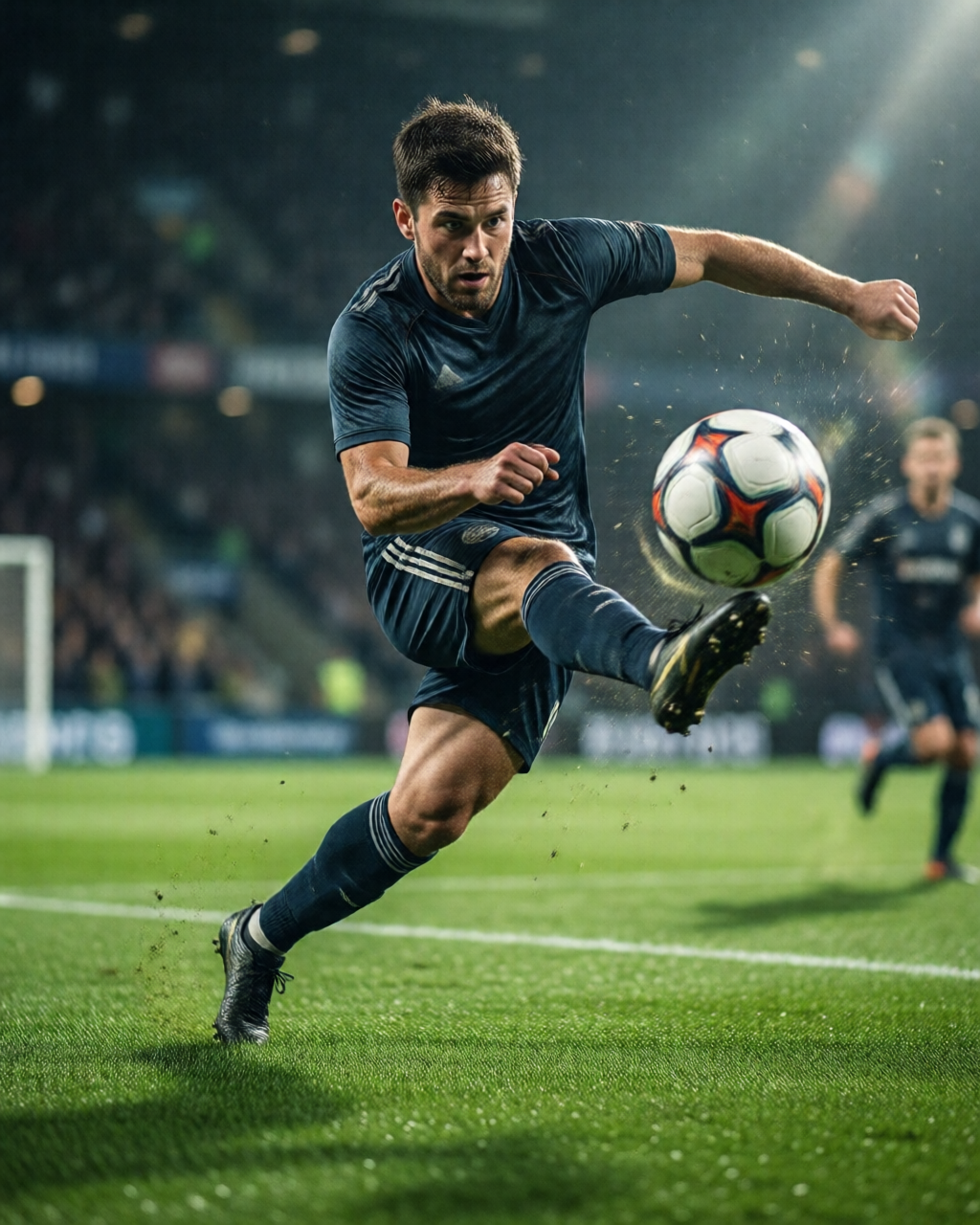
2026 Brazil vs Haiti: 3 Standings Insights
Brazil defeated Haiti 3-0 at Lincoln Financial Field on June 19, 2026, moving to 4 points from 2 Group C matches and placing Carlo Ancelotti’s side at the top of the section. Matheus Cunha scored twice and Vinicius Junior added the third goal, while Haiti suffered a second consecutive defeat and became the first team eliminated from the 2026 FIFA World Cup. Brazil’s position still depended on Morocco’s result against Scotland, because Morocco entered the round with 1 point after drawing Brazil 1-1. Raphinha’s first-half hamstring concern and Neymar’s possible return against Scotland became the subplot behind the table. The practical takeaway is simple: read Brazil’s 4-point total together with goal difference, remaining fixtures, and qualification scenarios rather than treating one victory as the whole story.

Photo by Priscila Almeida on Pexels
Brazil’s 3-0 result looked clean on the scoreboard, but football tables rarely reward lazy reading. Haiti’s elimination was confirmed by the combination of two defeats and the mathematical limits of its remaining match, while Brazil gained control of Group C without yet securing every possible tournament outcome. That distinction matters for anyone tracking Brazil national football team vs Haiti national football team standings, match predictions, or qualification permutations. Football Insights follows the table, the tactical shifts, and the player availability details because the numbers usually reveal the truth before the television panel does.
Want the wider tournament context before assessing the table?
The Top 3 Standings Insights at a Glance
- Brazil leads Group C after two matches — the 3-0 win over Haiti lifted Brazil to 4 points following the opening 1-1 draw with Morocco.
- Haiti was eliminated first — two defeats left Haiti unable to reach a qualifying position before its final group fixture.
- Brazil’s final ranking remained unfinished — Scotland, Morocco, goal difference, and Brazil’s last match still mattered despite the four-point advantage.
The table’s central fact is Brazil’s 4-point haul, not simply the three goals scored against Haiti. Brazil drew with Morocco in its opener, then corrected several attacking inefficiencies against Haiti through faster circulation and more direct movement from Vinicius Junior and Matheus Cunha. Morocco’s 1-0 victory over Scotland on the same matchday intensified the race behind Brazil, leaving every point and goal relevant. Haiti, meanwhile, had no route back into contention after losing its first two games. This is where many quick search summaries become misleading: “eliminated” describes Haiti’s mathematical position, while “top of Group C” describes Brazil’s current position, not necessarily its final placement.
For a compact reference, the standings logic can be reduced to four data points:
- Brazil: 4 points after 2 matches.
- Brazil’s results: 1-1 draw with Morocco, 3-0 win over Haiti.
- Haiti: 0 points after 2 defeats.
- Brazil’s next listed group match: Scotland on June 24, 2026.
2026 World Cup Group C standings guide
#1 Brazil: best overall
Brazil is the best overall standings position because 4 points from 2 matches combines an unbeaten record with a strong 3-0 goal margin against Haiti. The result also followed a 1-1 draw with Morocco, meaning Brazil recovered without needing a third fixture to rebuild momentum. That is a stronger platform than a narrow win followed by a defeat, even if the table still required a final confirmation after the Scotland match.
Carlo Ancelotti’s team appeared sharper than it had in the Morocco encounter. Matheus Cunha’s two goals gave Brazil a reliable central threat, while Vinicius Junior’s goal reflected the wider attacking quality available on the left. The contrast was visible in the match rhythm: Brazil moved the ball with greater urgency, forced Haiti deeper, and created enough pressure to turn territorial control into a three-goal margin. The cynical reading is obvious—Haiti offered less resistance than Morocco—but that does not erase Brazil’s improved execution.
The less comfortable number was Raphinha’s first-half withdrawal after approximately 40 minutes. The Barcelona forward appeared to suffer a hamstring injury, creating uncertainty around Brazil’s attacking rotation before Scotland. Neymar, aged 34, had missed the first two matches while recovering from a calf injury, although Ancelotti said Neymar was expected to train individually on Sunday and with the squad on Monday. As the FIFA World Cup 2026 match archive makes clear, group-stage qualification is judged by results, not by the elegance of the injury report. Believe it or not—I do.
See the tactical numbers behind Brazil’s position here:
#2 Haiti: best for understanding elimination scenarios
Haiti is the key team for understanding how World Cup elimination works because its second defeat made qualification mathematically impossible with one fixture remaining. The 3-0 loss to Brazil was not merely a bad evening in Philadelphia; combined with Haiti’s opening defeat, it produced a zero-point record that could no longer reach the required qualifying positions. That is why Haiti became the first eliminated team of the 2026 tournament.
The difference between a difficult position and elimination is arithmetic. A team with 0 points after 2 matches can theoretically recover only if the surrounding results leave enough points available and the competition structure permits it. Haiti’s results did neither. Brazil had already reached 4 points, Morocco had collected a win over Scotland, and Haiti’s remaining match could not repair the deficit against the established group totals. The table had stopped offering hope, regardless of how persuasive a final-match speech might sound.
Haiti’s elimination should not be interpreted as evidence that every match was tactically one-sided from the opening whistle. The decisive issue was the accumulated standings pressure. Haiti needed points immediately, but Brazil’s attacking quality punished defensive errors, with Cunha scoring twice and Vinicius Junior adding another. A final match still mattered for pride, squad evaluation, and tournament statistics, yet it no longer affected Haiti’s route to the knockout stage. For historical context, CONCACAF records the regional pathway through which Haiti reached the global tournament, a reminder that qualification itself was a significant achievement even when the group campaign ended early.

How Do Brazil and Haiti Standings Compare?
Brazil had 4 points and an unbeaten record after two matches, whereas Haiti had 0 points and two defeats; that six-point gap explains the standings outcome more clearly than the 3-0 score alone. Brazil also held the stronger goal profile, while Haiti’s final match could no longer restore qualification. The comparison is therefore about points, results, and mathematical possibility.
The head-to-head result was decisive but not the entire table. Brazil’s 3-0 victory supplied three points and a positive goal difference, while its earlier 1-1 draw with Morocco contributed the fourth point. Haiti’s position deteriorated because it had no points to offset the damage from the goals conceded. In a compact group, that creates a brutal chain reaction: every dropped point magnifies the value of the leaders’ results, and every additional goal can become relevant if teams finish level.
A useful comparison is:
| Metric | Brazil | Haiti |
|---|---|---|
| Matches played | 2 | 2 |
| Points | 4 | 0 |
| Wins | 1 | 0 |
| Draws | 1 | 0 |
| Defeats | 0 | 2 |
| Goals scored against opponent | 3 | 0 |
| Qualification status after Matchday 2 | Still competing | Eliminated |
The table also exposes a less obvious point: Brazil’s 4 points did not guarantee first place forever. Morocco’s 1-0 win over Scotland altered the pressure behind Brazil, and Brazil still had Scotland to play on June 24. That is why responsible standings analysis avoids claiming that one result has settled the entire group. It has not. It has changed the probabilities, which is less dramatic but considerably more useful.
Brazil 2026 World Cup qualification scenarios
What Changed Tactically in Brazil’s 3-0 Win?
Brazil improved by turning possession into earlier forward actions, using Matheus Cunha centrally and Vinicius Junior in wider attacking spaces; the result was two goals from Cunha and one from Vinicius Junior. Compared with the 1-1 Morocco draw, Brazil showed greater attacking efficiency and more punishment of Haiti’s defensive gaps. The tactical improvement directly supported the four-point standings position.
Against Morocco, Brazil had been forced to work through a more organised opponent, and the 1-1 score left the team exposed to criticism about control without enough penetration. Against Haiti, Brazil found room sooner and attacked the spaces behind the defensive line with greater confidence. Cunha’s brace mattered because a central striker converting repeated opportunities changes both the scoreboard and the opponent’s defensive behaviour. Once Haiti had to protect the centre more aggressively, Vinicius Junior received additional room to threaten from the flank.
However, the match also produced the Raphinha problem. His withdrawal around the 40-minute mark could force Ancelotti to reconsider the balance between width, ball progression, and finishing against Scotland. Neymar’s potential return offered another route to creativity, but a 34-year-old recovering from a calf injury cannot simply be inserted into a high-pressure match as if medical recovery were a software update. The International Olympic Committee consensus on sports injury management underscores the importance of graduated return-to-play processes; a tournament coach may want availability, but the body does not negotiate with the fixture list.
Football Insights therefore treats the 3-0 win as both a standings success and a selection test. Brazil earned the points it needed, but the next question is whether it can reproduce the attacking output if Raphinha is unavailable or Neymar is not ready for a full match. That unresolved issue is more informative than another round of patriotic slogans.
Want to evaluate Brazil’s next-match risk more closely?
How We Ranked These Standings Insights
We ranked the three insights using a 40% points-and-results weight, 25% qualification mathematics, 20% goal difference and match impact, and 15% forward-looking relevance for Brazil’s next fixture. This method prioritises what changes the table first, then considers why the change occurred and what remains uncertain. It prevents the headline score from overpowering the actual tournament structure.
The ranking criteria are:
- Points and record, 40%: Brazil’s 4 points and Haiti’s 0 points establish the primary order.
- Mathematical status, 25%: Haiti’s elimination is more consequential than a routine defeat because it ends qualification possibilities.
- Goal difference and performance, 20%: Brazil’s 3-0 margin demonstrates a stronger immediate response than the earlier 1-1 draw.
- Future relevance, 15%: Raphinha’s injury and Neymar’s possible return could alter Brazil’s final Group C position.
This framework also highlights an edge case that many standings pages miss: a team can lead temporarily while still facing meaningful qualification uncertainty. Brazil’s 4 points created control, but Morocco’s victory over Scotland and Brazil’s remaining match meant the final order had not been locked. Conversely, Haiti’s elimination was final even though one match remained, because the remaining points could not bridge the gap. The table contains two different kinds of certainty at once—Brazil’s strong present position and Haiti’s completed mathematical exit.

Photo by DS stories on Pexels
Which Should You Pick: Brazil’s Position or Haiti’s Story?
Choose Brazil’s standings profile when assessing Group C strength because 4 points, an unbeaten record, and a 3-0 win provide the clearest evidence of competitive control. Choose Haiti’s story when studying elimination risk, because two defeats demonstrate how quickly a tournament campaign can become mathematically unrecoverable. For predictions, use both: Brazil indicates current strength, while Haiti reveals the consequences of a slow start.
The contrarian conclusion is that Brazil’s win should not automatically be treated as proof of complete tournament dominance. Haiti was already under pressure, and the level of opposition differed from Morocco’s. Brazil deserves credit for improving its finishing and reaching the top of Group C, but Raphinha’s injury creates a tactical variable and Neymar’s fitness remains a practical question. A 3-0 result can be simultaneously convincing and incomplete—football’s favourite accounting trick.
For readers tracking Brazil national football team vs Haiti national football team standings, the cleanest summary is:
- Brazil: 4 points after a 1-1 draw with Morocco and a 3-0 win over Haiti.
- Haiti: 0 points after two defeats and elimination from the tournament.
- Brazil’s attacking leaders: Matheus Cunha with 2 goals and Vinicius Junior with 1.
- Key availability issue: Raphinha’s apparent hamstring injury.
- Potential reinforcement: Neymar, who had missed the opening two matches with a calf injury.
- Next standings checkpoint: Brazil versus Scotland on June 24, 2026.
For responsible match analysis, compare verified results, player availability, and qualification scenarios rather than chasing emotional certainty. The New York Times report on Brazil’s win over Haiti provides additional match context, while official tournament updates should decide any final interpretation. “The group stage is a competition of points and goal difference,” is the practical principle behind every table, even when commentators dress it up as destiny. Believe it or not—I do.
Ready to follow the next Group C movement?
World Cup match predictions and team form
Frequently Asked Questions
Q: What are the Brazil national football team vs Haiti national football team standings after their 2026 match?
A: Brazil had 4 points after two Group C matches, while Haiti had 0 points after two defeats. Brazil drew 1-1 with Morocco and defeated Haiti 3-0, giving Brazil an unbeaten record and a strong goal difference. Haiti’s second loss left the team mathematically eliminated with one group match still remaining.
Q: How did Brazil reach 4 points in Group C?
A: Brazil reached 4 points through a 1-1 draw with Morocco and a 3-0 victory over Haiti. Matheus Cunha scored twice against Haiti, while Vinicius Junior scored once. The combination of one win and one draw placed Brazil above teams with fewer points, although the final group ranking still depended on later results and Brazil’s match against Scotland.
Q: What is the difference between Brazil’s position and Haiti’s position?
A: Brazil remained in contention at the top of Group C, while Haiti was eliminated after two defeats. Brazil had 4 points, an unbeaten record, and a 3-0 win in the head-to-head match. Haiti had 0 points, so its remaining fixture could no longer produce enough points to reach a qualifying position.
Q: Why was Haiti eliminated after only two matches?
A: Haiti was eliminated because its two defeats left no mathematical route to a qualifying position after the other Group C results. A final match remained, but the maximum points Haiti could earn were insufficient to overcome the established gap. This is a standings calculation, not a judgment based only on the 3-0 scoreline.
Q: Can Brazil still finish below the top position in Group C?
A: Yes, Brazil’s 4 points gave it control but did not automatically guarantee first place before the group concluded. Morocco’s 1-0 win over Scotland and Brazil’s remaining match against Scotland still affected the final order. Goal difference and total points would determine the ranking if teams finished level.
Q: Will Raphinha play Brazil’s next World Cup match?
A: Raphinha’s availability depends on the severity of the apparent hamstring injury suffered before halftime against Haiti. He was withdrawn after approximately 40 minutes, but a confirmed diagnosis and training assessment are required before predicting his selection. Brazil could also consider Neymar, who was recovering from a calf injury after missing the first two matches.
Q: Was Neymar expected to return for Brazil against Scotland?
A: Carlo Ancelotti indicated that Neymar was expected to train individually first and then with the full squad before the Scotland match on June 24, 2026. Neymar, aged 34, had missed Brazil’s opening two games while recovering from a calf injury. Training participation would improve his chances of involvement, but it would not guarantee a starting role or full-match fitness.
Follow Football Insights for updated Brazil standings, World Cup qualification scenarios, tactical analysis, and player availability reports after every Group C fixture.